Wrapper or the Sweet Itself? Auditing Candy Slot Themes Against the Pick'n'mix Counter

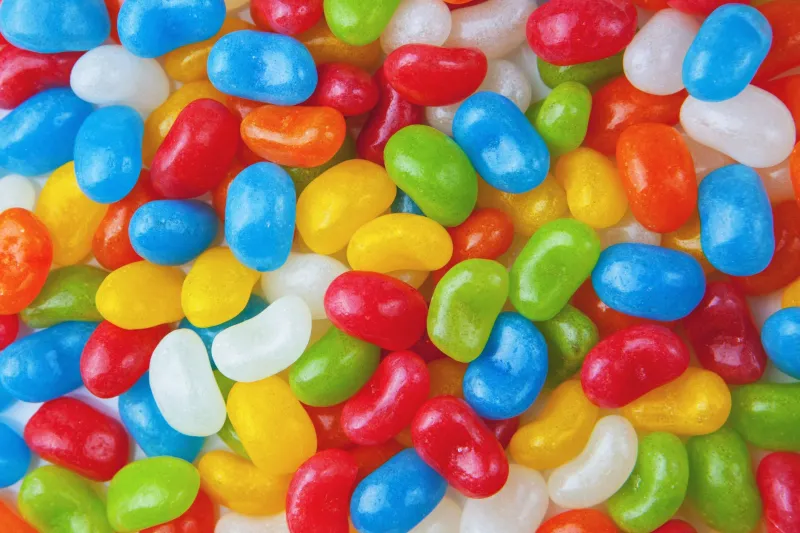
Photo: AnonymousUnknown author / Helsingin Sanomat, Public domain, via Wikimedia Commons
There are two ways to sell a sweet. You can put a decent rhubarb and custard in a paper bag and let it speak for itself, or you can wrap a lump of nothing in foil, call it a Flying Saucer and rely on the name. Candy slots do exactly the same thing. Some use their theme to explain the game. Others use it as wallpaper over a paytable nobody will ever read.
So here is an audit, scored the only way a British sweet tooth can score anything: against the pick'n'mix counter.
The three questions behind every grade
Each theme gets marked on three things, and none of them is graphics quality.
- Does it capture the actual sweet? Not just the colour — the texture, the era, the specific memory.
- Does it make the mechanics clearer? A good theme tells you what a wild does, when a scatter triggers, and where the money sits. A bad one buries it.
- Does it nudge you to spend more? Nostalgia is powerful. So is a cartoon gummy bear celebrating a win smaller than your stake.
The grades run from Rhubarb & Custard — the gold standard, two-tone and honest — down to the Foam Banana at the Bottom of the Bag: technically a sweet, technically in the bag, nobody is eating it.
Tier one: the two-tone jobs that get it right
Rhubarb & Custard is one of the most British sweets ever made: pink and yellow, slightly medicinal, and essentially nowhere else on earth. Slots built round that kind of nostalgia tend to have a quietly old-fashioned look — muted stripes, boiled-sweet palettes, a shop-counter feel rather than a laser show.
That restraint usually shows up in the mechanics too. Not always, but often these are fixed-line games with a familiar structure: 20 lines, a handful of symbols, a straightforward free-spins round. The theme and the frame agree with each other, which means a new player can work out what is happening without hunting for the info button.
Pick'n'mix equivalent: the classic you always take three of.
Tier two: Cola Bottle — solid, chewy, a bit familiar
Fruit salad, pineapple chunk, cola bottle, blackjack chews. These themes are everywhere, and that is fine. The best versions keep a tight, readable palette and a small enough symbol set that you learn it in two spins. The worst lob a fizzy-drink colour scheme over a 1,024-ways game and hope nobody asks questions.
The tell is the paytable. If the game bothers to explain itself — clear symbol tiers, an obvious scatter, a bonus round that behaves the way the theme implies — it is a Cola Bottle. Chewy, unglamorous, reliable.
Pick'n'mix equivalent: the one holding the bag together.
Tier three: Flying Saucers — all wrapper, no filling
Here is the one that stings, because it is also the one most heavily promoted.
Flying Saucers are rice paper and a puff of sherbet. They exist because of the name and the shape. The slot equivalent is a game where the sugar is purely decorative: lollipop wilds, candy-cane scatters, cascading reels dressed up as a sugar rush, and a multiplier ladder labelled with sweet jars instead of numbers.
None of that is a scam. But when a theme adds this much noise, the mechanics get foggier. Ask yourself:
- When a win lands, can you tell which symbols paid? On a long cascade, plenty of players cannot.
- Is the wild clearly marked, or is it just one more luminous sweet on the grid?
- Does the bonus buy button sit front and centre, priced at something like 90x your stake, in a shop where a 10p spin felt like pocket change?
That last one is where a theme stops being fun and starts being a nudge.
Pick'n'mix equivalent: impressive until you bite it.
The fog factor: how sugar hides the mechanics
Candy themes are outstanding at hiding friction. Bright colours and cheerful animations pull your eye to the top of the grid, where the win celebrations happen, and away from the bottom of the screen, where the bet level and balance live.
The most common fog in this genre:
- Cluster grids with automatic cascades, where every spin feels like a near-miss because symbols keep dropping.
- Tiny bet displays sitting next to enormous sweet graphics.
- Bonus purchases presented as a pick'n'mix scoop rather than a real-money transaction.
- Max win numbers in the marketing that bear no resemblance to a normal session.
A good theme does the opposite: it uses its imagery to orient you. You know the gummy is low-paying because the paytable shows it as a tiny pile. You know the golden wrapped sweet is a scatter because the game has told you twice in plain language. Clarity is a design choice, and it is not always the choice being made.
The responsible-play check nobody prints on the wrapper
Let us be blunt for a paragraph. Sweet-shop nostalgia is a marketing device aimed at adults with specific childhood memories. That is not sinister on its own — it is simply the trade. What matters is whether you are playing the game or the memory.
Two practical hedges.
Set a deposit limit before you pick the game, not after. The sweetie-jar design of the lobby makes it very easy to hop from one candy title to the next, and hopping is expensive. One weekly limit is worth more than ten good intentions.
Weigh the fun by time, not by win. A session where you spent £10 and had a pleasant hour is a better outcome than one where you chased a £4 win back to £60 and lost the lot by midnight.
If it stops being fun, stop. GamCare and BeGambleAware offer free, confidential help, and GamStop can seal the jar entirely for a set period. 18+ only, always.
The audit scoreboard
| Theme | Sweet-shop equivalent | Capture | Clarity | Nudge risk |
|---|---|---|---|---|
| Rhubarb and custard nostalgia | Two-tone classic | High | High | Low |
| Cola bottle and fruit salad | The bag-holders | Medium | Medium | Medium |
| Rainbow gummy cluster grids | Foam banana | Medium | Low | High |
| Candy-cane and lollipop epics | Flying Saucer | Low | Low | High |
Doing your own audit in two minutes
Open any candy slot and apply these in order:
- Find the wild and the scatter in the paytable — under 30 seconds?
- Work out whether it is clusters, lines or ways — under 30 seconds?
- Find the minimum bet and the bonus buy price — both clear?
- Decide your session budget and set a timer.
If a game fails questions one to three, it has failed the same test as a pick'n'mix scoop that is 70% foam. You can still enjoy it. Just know what you are buying.